
Are you interested in working in healthcare? Do you like to provide direct care to patients? Do you want to be part of a healthcare sector to support patients during illness and recovery? If the answer is yes, then becoming a Certified Nursing Assistant (CNA) may be a good option for you.
Becoming a CNA is often considered as the first step into the healthcare industry. It does not require long years of study; however, it allows you to gain real experience by working closely with patients. Before enrolling in a CNA course, it is important to understand what is a CNA, where they work, and what kind of training is required to become one.
What is a CNA (Certified Nursing Assistant)?
A Certified Nursing Assistant (CNA) is a healthcare professional who is consistently at the bedside to provide direct care to patients which is different from nurses who generally manage the treatments.
So a CNA is often considered as the first-hand role in healthcare. Hospitals, nursing homes, and long-term care facilities rely on these folks to keep patients safe, comfortable, and supported throughout the day
Overview of the CNA Role
The roles of a nursing assistant vary depending on where you live and work. CNAs are trained to work in a wide range of settings including hospitals, assisted living facilities, personal homes, adult day care centres and nursing homes. They help keep patients comfortable and safe during the day.
In addition to personal care, they perform basic medical tasks which includes checking a patient’s temperature, blood pressure, pulse, and breathing rate. A certified nursing assistant also listens to patient concerns and reports important information to nurses when needed.
The role exists because patients need constant assistance that nurses and doctors simply don’t have time to provide due to their busy schedules. CNAs also assist nurses and follow instructions provided by Registered Nurses (RNs) and Licensed Practical Nurses (LPNs).
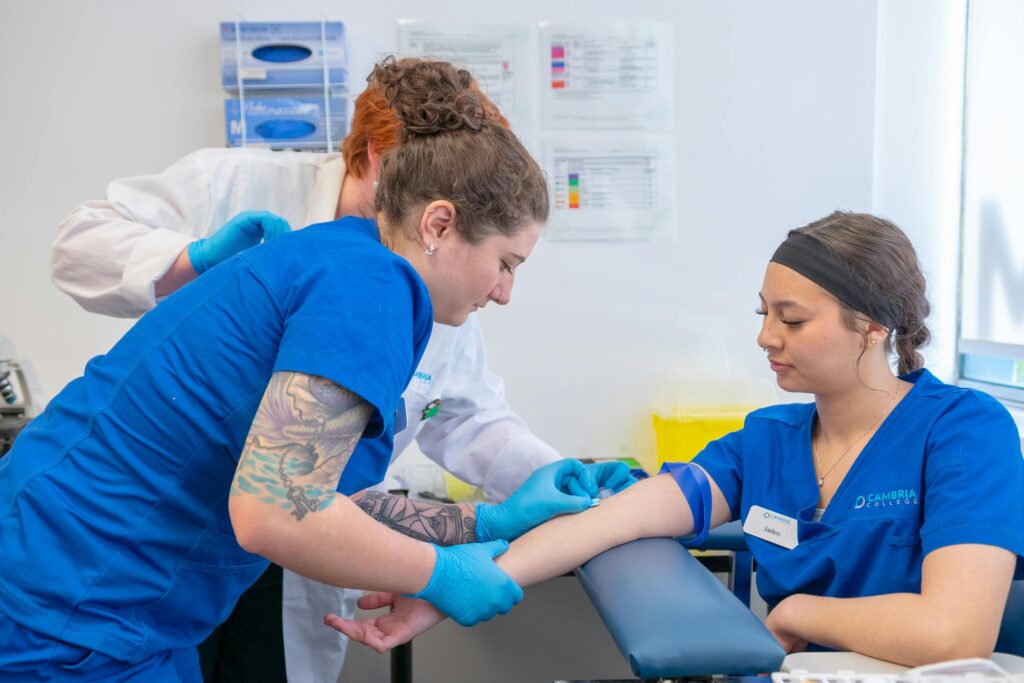
Where Do Certified Nursing Assistants Work?
CNAs are trained to work in many different healthcare settings, including hospitals, nursing homes, assisted living facilities, rehabilitation centers, adult day care centers, and private homes.
On average, approx. 35-40% of the CNA workforce in the U.S. is employed in nursing homes and long-term care facilities.
In all of these settings, CNAs act as a medium to connect between patients and nurses. Because nursing assistants is with patients most of the time, they are often the first to notice small changes, that need to be reported immediately to the respective nurses.
What Is the CNA Workload Like?
The workload of a Certified Nursing Assistant can be busy in healthcare facilities where some shifts may be easy going, whereas others may require frequent movement and attention. The tasks can be physically demanding and constant standing, walking, and assisting patients might be required during the work hours. The work includes the following:
1.Vital Signs Monitoring
2. Managing ADLs (Activities of Daily Living) for example, bathing, dressing, and feeding the patients.
3. Patient Movement: It includes transferring and repositioning patients.
4. Reporting every observation to the nursing staff to ensure accurate medical records.
Although the job can be challenging, it can still be rewarding because it offers a chance to help people who need care and support which provides strong motivation. Compassion and patience helps in managing difficult days and continue providing quality care.
Benefits of a Career as a Certified Nursing Assistant
Choose Your Preferred Work Environment
If you become a nurse aide, you have the power to choose where you want to work. You can work in a wide variety of settings depending on your strengths and preferences. You can work as a home health care worker, in hospitals or in a hospice situation. Each of these work environments offers different benefits. Working schedules are also more flexible, which is advantageous if you are raising a family or continuing with education.
Affordable Training Programs
Certified nursing assistant training programs are usually affordable compared to other healthcare programs ranging between $500 and $2,000. Training is offered through community colleges, vocational schools, hospitals, and private institutions. One can even get free training in some cases if he/she agrees to work with them for a certain period of time.
Opportunities for Career Growth
A CNA certification allows you to start earning a living and gaining patient-side experience in as little as 4 to 12 weeks, and aside from emotional rewards, working as a CNA can open doors to other healthcare careers. Since nursing assistants get valuable experience while caring for patients they become solid candidates for nursing school, and later they can choose to become LPNs or RNs.
Ideal for Compassionate Persons
For many, the biggest draw is the human connection, and individuals who love to care for others, nursing assistant career can definitely be suitable for them. It is a job that offers a great sense of purpose. Helping patients stay comfortable, safe, and supported can be emotionally rewarding. They kind of become a second family for the patients due to regular interactions.
How do you become a CNA?
You must complete a state approved CNA training program, regulated by both federal and state laws to be considered as certified nursing assistant. Accredited programs are usually divided into two parts as outlined below:
- The Classroom: Teaches theoretical concepts like anatomy, body systems, physiology, and legal ethics.
- The Clinicals: Provides Hands-on practice in a real healthcare setting under supervision.
Once the training is completed, students have to pass a certified nursing assistant certification exam. The exam usually includes a written or oral test along with a skills test.
Only after passing the exam you can earn a CNA license i.e. getting listed on the State Nurse Aide Registry. This listing makes you eligible to legally work as a CNA.
How Long Does CNA Training Take?
Generally, A nursing assistant training program lasts between 4 and 12 weeks, however, the length depends on state requirements and program structure. Some programs are quick so they can be finished early, whereas others allow more time for practice.
It also depends upon whether you can offer a full-time commitment to the training or not; in that case, you can also opt for weekend classes or part-time offerings. This approach may extend your training completion time significantly. Before enrolling in any CNA program, one should confirm that the program meets the criteria as per the state’s certification rules.

Is it a Starting Point or a Long-Term Role?
It is generally considered as a starting point for many individuals, which helps them to decide if healthcare is right for them and later continue education in the same field.
Also, work done in this field can be converted into a long-term career as well because it gives enough experience in patient interaction and hands-on care to stay in the role for a long time.
Beginners can use this role as a launching pad, as many individuals opt to become registered nurses after starting as a nursing assistant. The role offers flexibility depending on personal goals, whether they want to pursue education or turn it into a career.
How much does a certified nursing assistant make?
A certified nursing assistant’s salary average generally ranges between $14 and $22 per hour, where a beginner CNA’s salary is at the lower end of this range, especially in long-term care facilities or smaller towns. It also depends upon various factors such as healthcare facility/employer, experience, economic condition, and negotiation skills. As the individual gets more experience, the salary is incremented, particularly if employed in hospitals or high-demand areas.
One of the deciding factors is the state or location you choose to practice as a nursing assistant. Annually, a certified nursing assistant’s salary can lie anywhere between $20,000 and $30,000.
Big cities pay their nursing assistants more; for example, in California, CNAs earn more than the national average, with many reporting around $23 per hour, depending on city and employer
How Work Environments and Pay Compare
According to data from the Bureau of Labor Statistics (BLS) your paycheck is directly proportional to your work/environment settings.
The CNA salaries do vary from state to state, however, just to give you a general idea, here is a comparison list for your reference:
- Working in government sector can easily give you more than $42000 each year.
- In hospitals, a CNA worker generally earns above or equal to $40000 per year.
- Nursinghomes earn you anywhere between $35,000 – $38,000 per annum.
CNA vs LPN vs RN: What Is the Difference?
A CNA is not a nurse. They do not diagnose patients, decide treatment plans, or prescribe medication. They focus on daily patient care and assist nurses by reporting observations.
There are quite a few differences between the roles of a CNA, Licensed Practical Nurse and a Registered Nurse. Differences start to appear right from the education required to their salaries and the key duties they perform.
A CNA only requires a State certification whereas LPN and RN are required to have a Diploma and a Associate/Bachelor’s degree respectively.
A LPN generally takes care of all the medications and provides wound care to the ill, and a RN is responsible for doing comprehensive health assessments and carry out detailed care planning along with supervision of a CNA and a LPN.
Is Being a Nursing Assistant Right for You?
Being a CNA can definitely be the right choice if you enjoy helping others, do not mind physical work, and can handle close personal care. It is important to think honestly about whether this role fits your personality and goals before you decide to be a CNA because the turnover rate for CNAs is generally quite high due to various factors such as Physical and emotional challenges, and moreover, less starting pay.
Conclusion
Now, you must have understood what a CNA is. To summarize again, a CNA is a healthcare professional who assists patients with their daily needs and provides assistance to nurses in different medical environments. Even though the role can be demanding, still, it definitely provides valuable experience and a great opportunity to positively impact people’s lives for good. Thus, for anyone interested in the healthcare field, pursuing a CNA training can be a practical and rewarding initial step into this industry.