
How to Pass the CNA Skills Test: A Practical Roadmap to Your New Career
You can recite all of the steps in the cna skills handbook in your sleep. However, in a sterile testing room with a stranger watching every move, it seems like muscle memory disappears. Your heart beats faster than the speed limit on the highway, your palms get moist with sweat, and before you know it, you’re stumped by the simplest of questions: Do I wash my hands before or after pulling the privacy curtain? This phenomenon of being frozen or stumped is the main reason why many qualified students fail the cna clinical skills test. It is not the lack of knowledge; it is the pressure of being observed.
You don’t have to be perfect to pass this test; you just have to be safe and consistent. It does not matter whether you are taking the test at Prometric, Pearson VUE, or Headmaster; the end result is the same: to prove that you are capable of caring for the patient without harming him or her.
The Statistical Reality of the Practical Exam
It is always helpful to know that you are not the only one feeling this way. According to national statistics from the year 2025, the passing rate of the practical portion of the test on the first attempt is at approximately 84.5%. While this figure seems very promising, the reality is that out of every six students taking the test, one will need to retake the test.
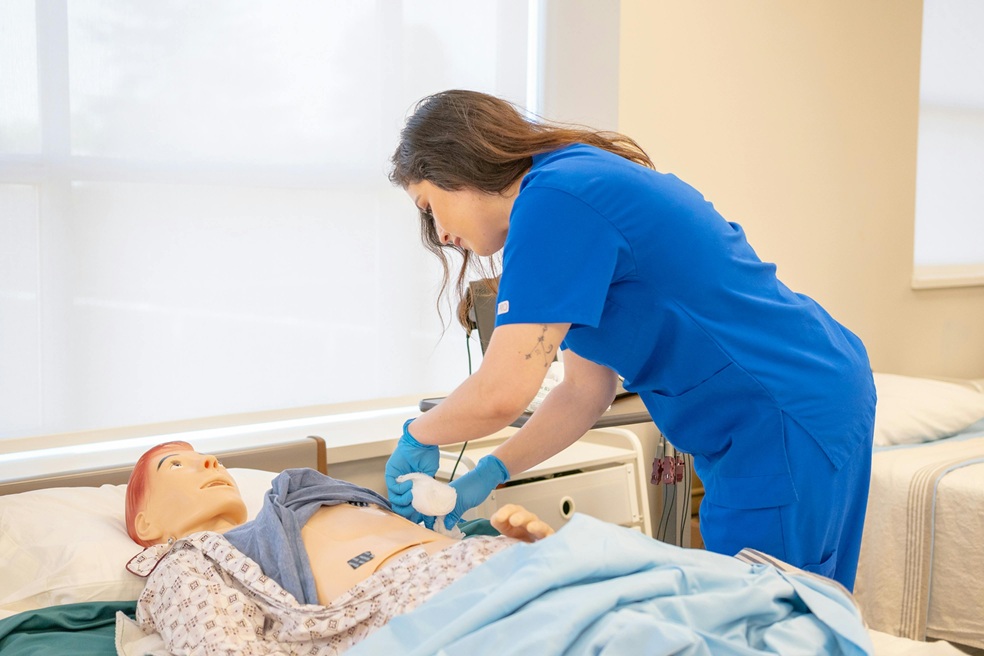
We’ve seen students who failed the test on the first attempt actually did very well in the training programs. The only thing wrong with them was the tendency to get overly preoccupied with the step-by-step guides and forgot the ‘reasons’ behind the safety measures. If you consider the evaluator as merely observing the scene and the manikin or actor as the real patient with real rights and feelings, then the muscle memory would surely take over.
Bold Steps Decoded and the Automatic Failures
Each skill in your skills handbook is divided into steps, but not all are created equal. Testing providers use what we call “Critical Element Steps” (bolded in your study guides).
The Non-Negotiable Safety Triggers
If you miss one bolded step in the skills test, the entire skill is considered failed. If you fail two skills in the nursing assistant skills test, in many states, this means the entire test is considered failed. According to the 2026 testing standards, the most frequent automatic failure triggers are:
- Missing the step to lock the wheels: It does not matter if the device is a bed or a wheelchair; the wheels must be locked before the transfer.
- Leaving the bed raised: If the nurse assistant finishes the task and walks away with the bed still raised to the “working height,” the nurse assistant is considered unsafe.
- Contamination in Hygiene: If the nurse assistant touches a clean surface with dirty gloves or fails to wash hands for at least 20 seconds of friction, the test is over.
The Power of the Correction
Here is one more “pro tip” that many nurse assistants fail to remember:
Did you know that in the vast majority of nurse assistant skills tests, the nurse assistant can actually correct the error as long as they have not told the proctor that they are “finished” with the task? If the nurse assistant realizes that they forgot to lock the wheels halfway through the transfer, they can stop and say, “I want to make a correction.” They can then go back and lock the wheels before continuing with the transfer. It is actually considered very good practice by the testing providers.
Indirect Care: The Points You Didn’t Know You Were Getting
There is a “hidden” skill that is an integral component of every single task that is performed: Indirect Care.
This is not a procedure, like taking the resident’s blood pressure, but the professional conduct that is exhibited during the performance of these tasks.
A failure in Indirect Care is the reason for many of the points that are lost. You are graded on the following aspects of Indirect Care:
- Respect of the Resident’s Rights
- Patient’s Privacy.
- Resident’s Comfort Management.
- Infection Control.
Recent feedback from the 2026 candidate survey shows that when the examinees explain their Indirect Care by stating, “I am now pulling the curtain for the patient’s privacy,” they tend to get a better grade.
Mastering the High-Fail Skills
While the cna skills test has 22 possible skills, some of these skills are much harder to pass than the others.
Recent studies of the data gathered from the tests have shown that the three skills that are most difficult to get right are the following:
- Vital Signs – The Margin of Error
When taking the skills test, it is not the student’s results that is measured, but the student’s results as compared to the results of the proctor.
Blood Pressure: The student’s reading has to be within +/- 4mmHg of the proctor’s.
Pulse & Respiration: The student has to count the pulse and respiration for a whole 60 seconds. Don’t even think about trying the trick of counting for 30 seconds and doubling the number, as the proctor is sure to see the student’s watch. The student has to be within +/- 2 beats/respiration. - Catheter Care and Perineal Care
This skill is heavy on infection control. The most common mistake made in this skill is cross-contamination. It is important to note that you must remember the “front-to-back” rule and make sure you are using a new area of the washcloth for every single stroke. If you make the same spot twice, you have technically failed the infection control portion of the skill. - Range of Motion (ROM)
The trick in this skill is not extending enough. We have noticed that nervous test-takers extend the resident’s limbs too quickly. It is important that you ask the resident, “Are you feeling any pain or discomfort?” at least twice throughout the skill.
Comparing the Big Three Testing Providers
The companies that administer the cna clinical skills test vary by state. While the basic nursing skills remain the same, the “flow” of the test varies.
| Feature | Pearson VUE (NNAAP) | Prometric | Headmaster (D&S) |
| Number of Skills | 5 Skills | 4-5 Skills | 5 Skills |
| Mandatory Skill | Handwashing | Handwashing | Handwashing / PPE |
| Time Limit | 30 Minutes | 31–40 Minutes | 35–40 Minutes |
| Scoring Style | Checklist format | Checklist Based | Checklist Based |
Strategies for CNA Skills Exam Practice
When you are getting ready to take the nursing assistant skills test, it is important that you don’t try to do everything at once.
- The “Dry Run” Phase
Don’t have any equipment in the room, and walk through your house “performing” the skills on an imaginary patient. This will help you build the neurological paths for the “opening and closing” routines (Knock, Wash, Explain, Privacy vs. Comfort, Call Light, Wash). - Use a Practice Partner
Have them hold your skills handbook in front of you, observing your actions. Tell them to “be the mean evaluator” and not give you any hints. If they see the inside of the sink when hand washing, stop them immediately. - Timed Scenarios
After learning the steps, set a timer for 30 minutes, and pick 5 random skills to practice under the pressure of the time constraint of the cna clinical skills test. This helps you realize where you can save time, like when bed-making, allowing you more time for precision skills, like vitals.
While focusing on the hands-on aspect, remember that a cna written test practice is just as important as the clinical skills test practice, as many of the safety rules that you learn, like the appropriate degree of the bed when feeding, are what you’ll actually be graded on during the hands-on.
Managing Test-Day “Brain Fog”
The day of the clinical skills test, if you tend to get nervous, try not to consume caffeine the morning of the test. Arrive at least 30 minutes early, wearing professional scrubs, as well as non-skid shoes. Make sure to wear a watch with a second hand, as the clock may not have a second hand, which could be behind you.
When entering the exam, take a deep breath, as well as read the instruction card twice. If the card states “The resident is wearing a weak right arm,” this is a big clue that means the shirt goes on the right arm first, which is crucial in passing the skills test, as opposed to failing the test.
People Also Ask
What is the most failed skill on the clinical exam?
The most common failed skills are Handwashing and Blood Pressure. Handwashing is often failed because you touch the sink or don’t wash for the complete 20 seconds. The reason for failing Blood Pressure is that your results must be almost identical to the proctor’s.
Can I retake the skills portion of the exam if I fail it?
Absolutely! In most states, you may retake the practical portion of the exam three times during a two-year period after completing your training. However, you don’t have to retake both portions of the exam. Only retake the portion you failed.
How long do I have to wait for my results?
If you take your exam through Prometric or Headmaster, you should get your results via email within 24-48 hours. Pearson VUE results should be available online the evening of or the day after you take your exam.
Do I have to practice my nursing assistant skills exam on a person?
It depends on your state. Some states use a doll for all “intimate care” (like perineal care) and another fellow student for all other skills such as feeding, transfer, etc.
Final Thoughts
Don’t let the fear of a single mistake ruin your confidence. Most testing centers offer you the right to correct yourself as long as you have not said the words “Skill Complete.” Take that opportunity. Trends suggest that it’s not the speediest test-taker that succeeds, it’s the ones that make sure to wash those hands for 20 seconds, and make sure those wheelchair brakes are securely engaged every time. Safety isn’t just a grade on your cna skills test, it’s the very foundation of the career you are about to embark on.