
How to Become a CNA: A Step-By-Step Guide for Beginners
Certified Nursing Assistant role is still considered as the the fastest and most practical way to enter healthcare in the United States. Most folks have heard the term CNA but are not 100% sure what the role involves or what it takes to qualify. This confusion usually leads to one simple question: how to become a CNA?
The journey can be bewildering navigating between state registries and choosing the right cna training and certification, the process can feel overwhelming before you even touch a stethoscope.
There are programs, exams, State rules, and loads of new terminology to learn. It might look like a lot of steps, but the way is fairly simple. You don’t need a medical degree or years in nursing school to become a CNA. What it does take is time, effort, and a willingness to learn hands-on patient care.
According to a recent data, there is an increasing demand for nursing assistants with more than 50,000 new job openings every year as the aging U.S. population requires more long-term support.

What CNA Training and Certification Includes
The training programs combine classroom instruction with practical clinical experience.
Federal law requires at least 75 training hours, however, now more than 30 U.S. states require 120 to 150 hours. These hours are split between theory and practical knowledge.
Folks are introduced to real healthcare settings during the clinical training, allowing them to apply classroom learning safely under supervision.
Step 1: Verify Your Basic Eligibility Requirements
There are a few requirements you must first meet before applying to any CNA program. These rules are established state by state, but in most cases, they are similar.
In most U.S. states, you must:
- Be at least 16 to 18 years of age.
- Be a high school graduate or GED recipient (some programs permit current students).
- Be able to read, write, and understand English.
- Pass a criminal background check.
- Be immunized/vaccinated (TB test, Flu, COVID-19)
Some programs may also require a simple health screening before clinical training commences. Such standards are in place for the safety of students as well as patients.
Since CNA rules can differ by state, you want to make sure you look into local requirements before continuing. This can be a time saver and can eliminate issues down the road.
Step 2: Choose a State-Approved CNA Program
In order to become a certified CNA, you need to finish an approved certified assistant program in your state. This step is critical. Not all training courses are eligible for reimbursement, and signing up for the wrong one can disqualify you from taking the certification exam.
Programs that are approved generally may be found at:
- Community colleges
- Technical or vocational schools
- Adult education centers
- Nursing homes or healthcare facilities
The majority of state health department websites post official lists of sanctioned CNA programs. It’s also the easiest place for you to tell that a program meets your state standards.
Beware programs that guarantee a quick certification without a lot of, or any, clinical experience. Genuine nursing assistant classes will always provide you with classroom training and also hands-on learning.
Step 3: Complete Classroom Training
The first part of the CNA training is typically conducted in a classroom. It is where students get their exposure to technologies before they are used with actual patients.
The time spent in the classroom and the clinicals varies from state to state; for example, in Florida, you might require 80 hours of Classroom and 40 hours of clinicals.
Classroom lessons often cover:
- Infection control and hand hygiene.
- Patient safety.
- Basic anatomy and body systems.
- Necessary communication skills.
- Privacy and patient rights.
This material is mainly for beginners. Previous health care experience is great, but not necessary! Teachers explain things so that and expect the kids to ask whatever.
It’s important to be prepared and take what you’re learning in the classroom seriously. A lot of the test questions are drawn from this material, and it gets you accustomed to what will be thrown your way in clinical work.
Step 4: Complete Clinical Training
The clinical training part is what students often struggle with the most, particularly at first. During the CNA Clinicals, students practice the skills in actual health facilities under supervision of a Registered Nurse. Mostly, it is conducted at nursing homes or long-term care facilities.
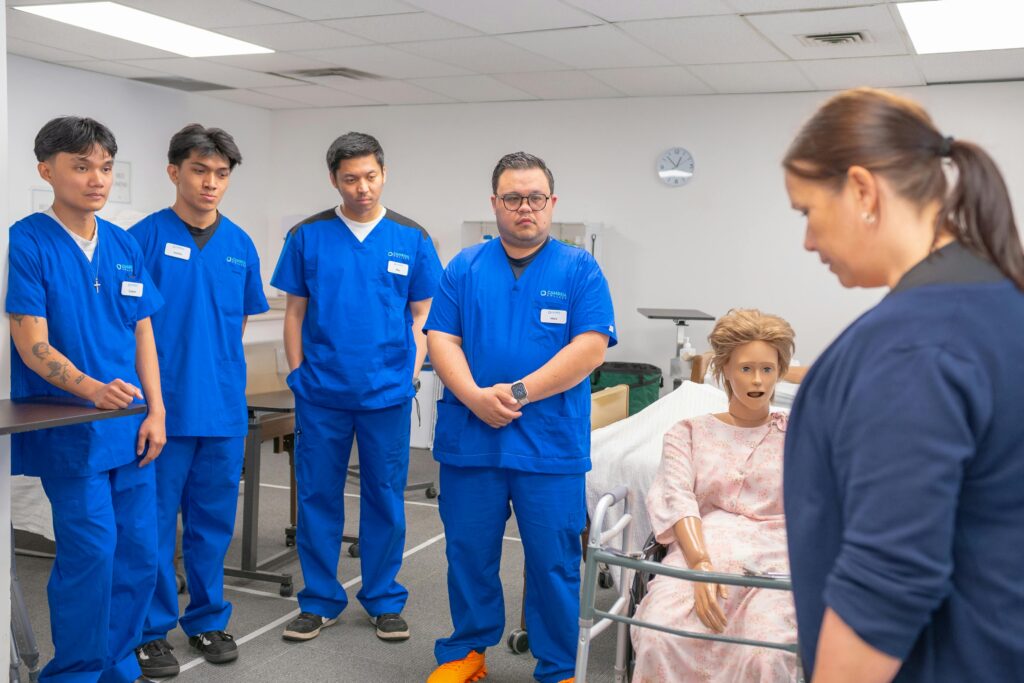
You may assist patients with ADLs (Activities of Daily Living):
- Bathing and grooming
- Dressing and hygiene
- Moving safely and repositioning
- Eating and drinking
- Basic comfort care
Initially, many students are concerned with getting it right or feeling confident. This is normal. Instructors closely supervise and help students correct mistakes early.
Clinical training is when many students finally get an idea of what CNA work is all about. It’s because it induces confidence and makes you well capable so you can actually deliver care to patients.
Point to Remember: Many individuals are offered jobs by evaluating their work at the clinical sites before they even graduate, so this is where you need to excel the most. National pass rates for the written exams are mostly high (around 85-90%), but the practical skills test is where many fall short.
Step 5: Get Ready for the CNA Certification Examination
Once the classroom and clinical training are finished, you must now get ready for the certified nursing assistant certification exam, usually referred to as the state competency exam.
The CNA exam is typically divided into two sections:
- A written or oral test that includes multiple choice questions covering the topics you learn during the training.
- A skills test where you need to perform around 3-5 skills in the presence of an evaluator.
These tests are a measure of your knowledge of safety rules, patient care aide, and basic health care concepts.
The skills test provokes more anxiety in many students. Typical slip-ups are speed, someone leaving steps out, or not explaining why something is being done. These errors tend to be more about being nervous and less about not knowing.
If each of these skills is practiced slowly and in a sequential manner, it takes the stress out of exams.
Step 6: Take the Exam and Earn Certification
But once you pass both sections of the examination, your name will be listed on the CNA registry in your state. That means that you can now officially own the CNA license.
Some states mandate that a certification renewal is required at established intervals which is generally every 2 years or 24 Months. Renewal may require:
- Proof of Full-time / Part-time Working for a specific number of hours.
- Proof of refresher training.
Be sure to keep up with renewal requirements so you don’t lose your certification.
Step 7: Apply for CNA Jobs
You can start applying for CNA jobs after you are certified. Nursing homes and long-term care facilities are generally the places where new CNAs receive their first opportunity, as these places frequently need many entry-level CNAs.
Hospitals may prefer more experience, but some hire grads. There are also assisted living homes, rehab centers, and in-home health care agencies where you can look for a placement.
Many times, your first nurse aide position is a learning experience. Who knows, maybe you’ll explore other work environments or pursue education in the medical field eventually.
How Long Does It Take to Be a CNA?
The majority of people are able to become a CNA in four to twelve weeks. The timeline depends on:
- State regulations
- CNA Program length
- Clinical training availability
Some programs are fast-paced and require full-time participation. Others permit part-time schedules that may take more time for completion but provide flexibility.
Classroom vs. Online CNA Programs
To accommodate busy schedules, many accredited providers now offer cna programs online, which allow students to complete the lecture and theory modules remotely from the comfort of your home.
Both Physical and virtual programs lead to the same cna license with only difference being the learning experience. In person programs offers quick and active feedback from the instructors, whereas online programs have more flexibility for the folks who cannot commit their physical availability.
Note: You cannot become a nursing assistant entirely online. As per the Federal rules and regulations, it is required to complete atleast 16 hours of supervised practical training in a clinical setting.
Common Mistakes Beginners Should Avoid
Individuals should avoid the following pitfalls during their nurse aide journey. These are not uncommon mistakes made by many CNA students:
- Opting for offender programs not approved by the state,
- Misjudging the physicality of the work, or may be sometimes breaching the privacy of the patients by forgetting to pull the curtain.
- Not practicing the skills for enough time before the exam, because even if you perform 90% of your task correctly, that 10% could still cost you the exam failure.
- Not washing the hands with proper technique.
- Waiting for their class or clinical shift to be over to document the reports or vitals.
These mistakes, if detected early, can be used to avoid unnecessary delays.
Conclusion
The process is less complicated when it’s broken up into easy steps. Take it one step at a time: find your cna certification program, clear your background check, and dive into your certified cna courses.
To start in healthcare, one can definitely can pursue nurse aide training for hands-on patient care experience and use it as a springboard to become a licensed practical nurse or even a registered nurse in the long run.
Therefore, learning how to become a cna is more than just a box to tick on a resume, and if you are looking for a recession-proof future and a job with strong sense of purpose, CNA certification remains one of the most accessible paths available.