
CNA Training: What to Expect in Class and Clinicals
Before you begin with CNA training, there must be a lot of questions going through your mind. Will the classes be difficult? What happens during clinicals? Is medical experience required? These concerns are pretty common among the beginners who are looking to enter healthcare for the first time.
There is no need to worry because the training is fully designed for beginners, as it follows a clear path that combines both classroom as well as clinical/practical experience right from ground zero. It is created to meet state and federal requirements while remaining accessible to folks with no healthcare background.
This isn’t just a basic first-aid course. For those searching for cna training near me or starting cna training online, the curriculum is designed to change your mindset from a “general care provider” to a clinical professional who can notice early warning signs before the situation becomes serious.
The Purpose of CNA Training
Main objective of CNA training is to prepare the individuals to provide safe, basic care to patients. It is not meant to replace the nursing education or teach advanced medical procedures by any means.
Most certified nurse assistant training programs are built around three main goals:
Explaining necessary communication skills for working with patients and nurses.
Teaching safe patient care techniques.
Introduction to the latest healthcare rules and standards
Guidelines and Rules
The training programs must meet federal guidelines established under the Omnibus Budget Reconciliation Act (OBRA) in most of the U.S. states. These guidelines require:
- A minimum of 75 training hours in total
- A fusion of both classroom concepts and hands on clinical experience.
- Practical skills assessment based on competency.
Federal law mandates atleast of 75 hours of instruction, however, more than 30 states now require closer to 120 or 150 hours as per the latest standards to ensure you’re prepared for the physical and legal demands of the job.
Attendance and Discipline Policies
Due to state and federal requirements, most CNA training programs have strict attendance rules. Absence from classes or clinicals may delay completion or require you to makeup hours.
Usual policies included in training:
- Mandatory attendance for clinical days. Almost 100% is required.
- Limited allowed absences
- Dress code requirements
- Strict Adherence to Patient Safety
- Prohibited Items such as cellphones, smoking, alcohol etc.
All individuals are expected to follow these rules and are meant to prepare them for real-world workplace standards.
What You’ll Learn in CNA Classes
Before we can start learning more about the classroom and clinical details, one should stay informed about the eligibility requirements to start CNA Training. To learn more about that, please check out how to become a CNA. Now let’s begin.
Topics Covered in the Classroom
The nurse aide training program introduces essential theoretical concepts in the classroom before students start to work with patients.
Common topics include:
- Infection prevention and proper handwashing
- Patient safety and fall prevention
- Basic anatomy and knowledge about body systems
- Communication skills: Using basic medical terms to convey information to your supervisors.
- Patient rights and Ethics
The concepts are taught using simple explanations with main focus on understanding daily care tasks rather than memorizing complex medical terms.
Skills included in the classroom practice session
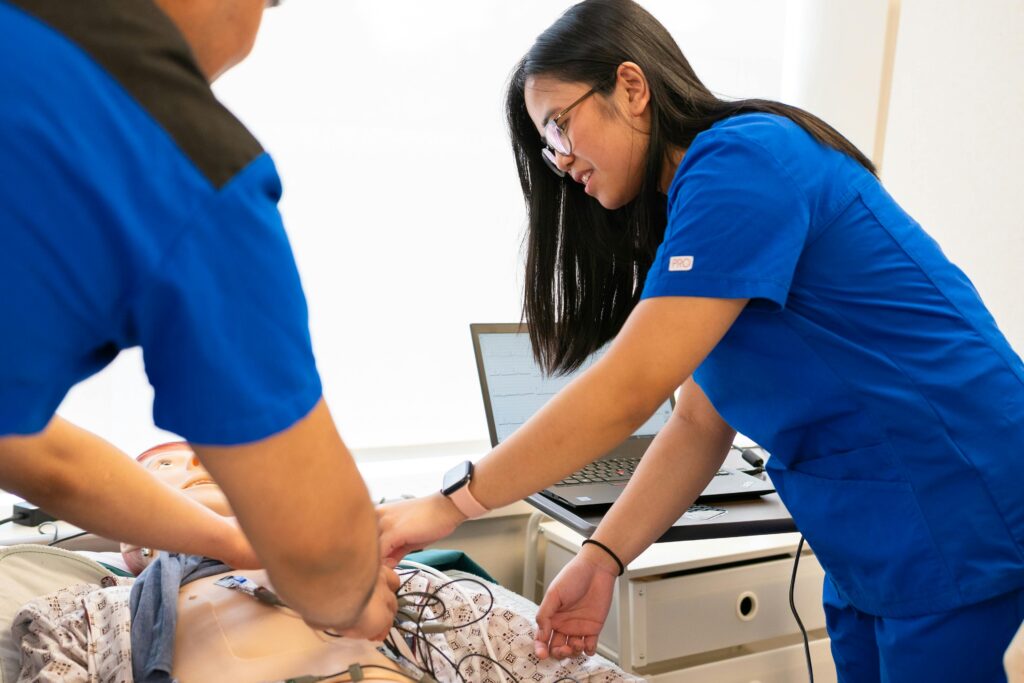
Students practice skills in the classroom before beginning with clinicals to build confidence in a controlled environment. They spend a lot of time with a plastic mannequin practice washing it’s hair, changing gown, and repositioning so to learn how to prevent bedsores.
Practicing on a mannequin gives them a hands on experience before dealing with real patients in healthcare settings
Other Skills commonly practiced include:
- Proper handwashing techniques i.e. the 20 second rule.
- How to make occupied and unoccupied beds
- Assisting with bathing and hygiene
- Helping patients to move or reposition themselves
- Taking and recording vitals, such as body temperature, blood pressure, etc.
- Observing patient behavior and reporting concerns to the supervisors.
Once you’ve mastered the mannequin, classmates start practicing on each other. You’ll take turns being the patient and the CNA.
Instructors provide guidance and allow students time to repeat the skills until they feel comfortable because students generally make mistakes while practicing for the first time.
No medical experience is required

Due to the nature of the training, a medical background is not at all required; therefore, if you are new to healthcare, you should not be worried. Most programs mainly require a high school diploma/GED and a background check.
Medical terms are introduced step by step during the training programs, giving the buffer to the beginners to adjust and instructors frequently repeat important concepts to strengthen learning and help understanding the core principles.
Students are encouraged to understand the care steps and safety procedures first, rather than worrying about medical terminology initially.
Core Elements of CNA Clinical Practice
1. Working With Real Patients During Training
Clinical training introduces students to real healthcare settings, such as nursing homes or long-term care facilities, where they train themselves with actual patients under close supervision.
A student usually spends around 20 to 40 hours practicing a list of essential skills in the lab. Although each skill is considered critical, a few are greatly emphasized by examiners, as outlined below:
1.1 Accuracy in vital signs measurement and reporting them correctly to the respective nurses.
1.2 Correct handwashing techniques.
1.3 Safe patient transfers using correct body mechanics to protect both the patient and the CNA
Every state’s training standards has set a minimum number of clinical hours as required to ensure students gain enough practical exposure.
2. Ethical and Privacy Skills
A significant time of certified nurse assistant training is dedicated to the legalities of the job, which includes the following:
2.1 HIPAA and Privacy. It includes protecting sensitive patient information and maintaining the privacy of the patient for times like bathing.
2.2 Abuse and reporting: You are taught to look for any signs of elder or kids abuse, and reporting it to the respective persons.
2.3 Scope of work: Learning the boundaries and limits of what you can do and what not.
3. Psychosocial and Mental Health Care
According to the updated standards, CNA certification training also emphasizes on Restorative care and dementia management of the patients, which teaches you techniques like de-escalation, Range of motion exercises, and helping patients do things themselevs.
Things to expect in the first clinical experience
Clinical is mainly considered as the internship experience where you leave your CNA school, and start training in an actual care facility with real patients.
Many students feel nervous during their first clinical because everything feels rushing, busier when compared to practicing in class. Instructors are aware of this and provide guidance throughout the process.
Things move at a faster pace, you will learn how to prioritize things and do multi-tasking. Also, some individuals may feel tired due to frequent standing, walking and performing other tasks.
Students are never expected to work independently during the clinicals as the goal is to apply classroom knowledge, learn proper communication, and follow instructions carefully.
How Long is CNA Training
Most CNA training programs last between four and twelve weeks, but the length also depends upon state requirements and program scheduling. Also, if you have any other commitments, then it may take a bit longer as well.
Some schools offer weekend CNA classes for students with weekday commitments, and at some places, Online CNA training is also provided which covers classroom material. however, the clinical training must be completed in person onl.
You’ll spend roughly 30 to 60 hours in a classroom before you ever touch a patient. Before enrolling, students should confirm that the program meets state certification standards.
Paid CNA Training Options
Often referred to as “ employer-sponsored training”, some healthcare facilities offer paid training options where students can earn as they learn; however, the wage would be much lower when compared to a CNA salary. These programs typically cover training costs in exchange for a work commitment after certification.
Such programs help to reduce upfront expenses, but they may require students to work at the facility for a specific period of time. Reviewing the terms carefully is important before enrolling into such programs.
Choosing the Right Training Program
When checking programs, students should look for state-approved and accredited programs that emphasize more on in-person clinical training, with an excellent pass rate (at least 95%) for the national CNA exam.
You should also compare the overall cost structure of the program including tuition, fees, and other miscellaneous costs.
To start, one should search for CNA training near me, however, contacting programs directly and asking questions often provides better clarity.
The Assessment
Training assessment is competency-based. Students are evaluated on the basis of following factors:
- Written Test: It includes a multiple-choice test that covers the stuff you learned in the classroom
- Skill accuracy: It involves testing the basic skills learned during training on a real patient in the presence of a nurse who evaluates your performance.
Passing the assessment does not guarantee certification; students must still pass the state CNA certification exam. Once you pass the exam and clear the certification requirements, you’re officially listed on the State Registry.
Challenges CNA Students Commonly Face
Certain challenges appear frequently during training as listed below:
- The work can be physically and emotionally demanding
- Adapting to different Patient Needs resulting in forgetting to explain actions to patients
- Hesitating to ask questions.
- Schedules can become too tight and busy to maintain balance between classroom and clinicals.
The process becomes much easier for individuals who practice regularly, stay organized, and communicate openly with instructors.
The Bottom Line
You should keep this in mind that after taking admission in a CNA training program you are not just preparing for an exam. It’s a role that takes stamina, patience, and the ability to handle stressful situations with care and compassion.
The reality is that being a Certified Nursing Assistant is one of the most physically and emotionally demanding roles in healthcare. However, it also offers a unique point of view that most doctors and nurses never get to experience i.e. the chance to provide the most intimate, essential care that can improve a patient’s daily quality of life.
CNA certification classes provide practical skills and real-world exposure for the beginners who are looking to settle into the healthcare career. With preparation and commitment, joining the training can be a strong first step into the field.
FAQs
What is the hardest part of the training??
For most folks, it’s the clinical training, however, one gets used to it once they start performing the tasks on regular basis, and of course, a nurse is always there to guide you everytime you feel stuck.
Can the training be completed online?
No. While you can complete the “theory” or book-learning portion via cna training online, every state requires a specific number of practical clinical hours in a healthcare facility before you can enter the exam.
How do I find CNA training near me?
State health department websites list approved programs, which can be filtered by location.